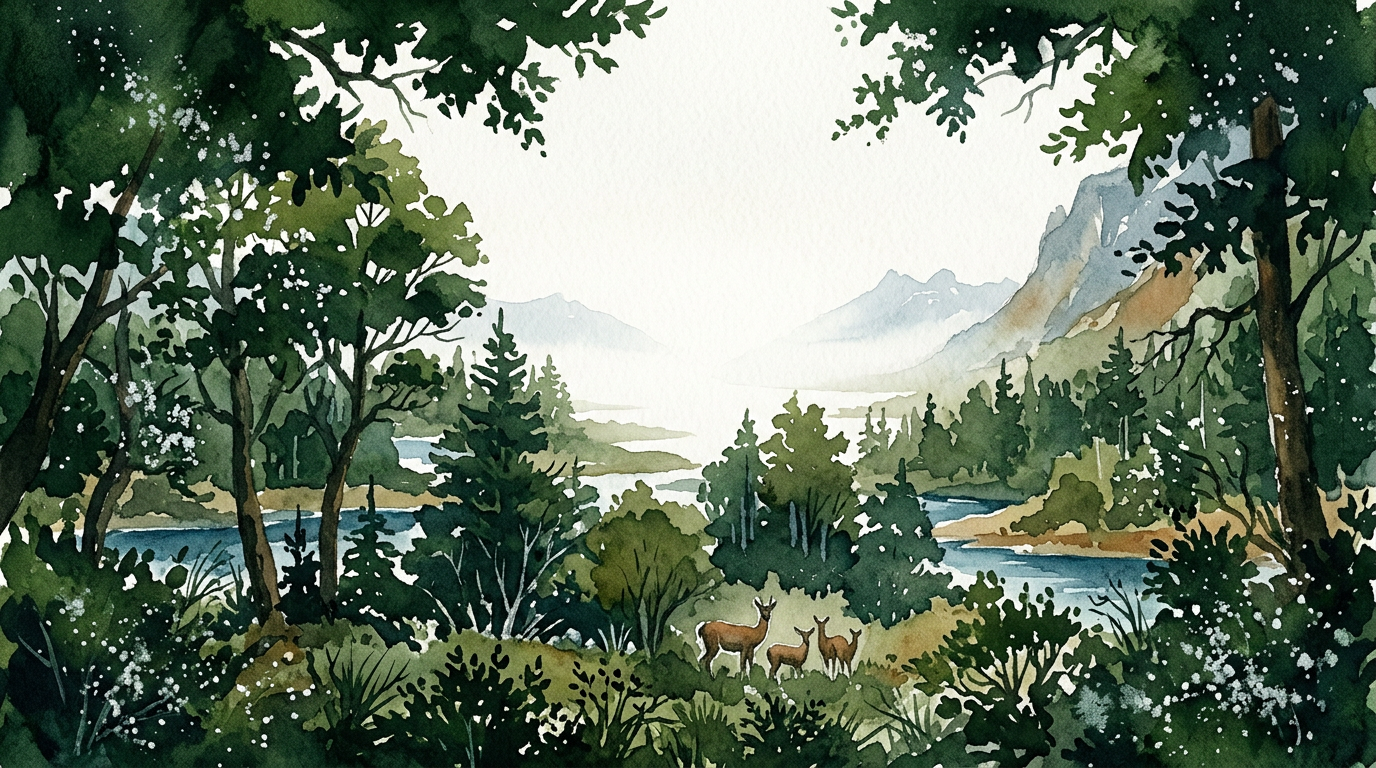
Some conservationists write petitions. And then there was Douglas Tompkins - a man who decided that the safest way to save a landscape is to buy it, heal it, and then hand it over to the state as a national park. In under twenty-five years he and his wife Kris turned millions of acres of Chile and Argentina into one of the largest protected-area networks in the southern hemisphere.
Many years ago I was lucky enough to shake Doug’s hand in Prague, when he came to present his landscape restoration projects in South America. He was a quiet, unassuming man, yet completely certain that what he was doing made sense. Years later my wife and I drove through Patagonia and visited the national parks he had talked about, one after another. Only there do you grasp the scale of what he left behind.
Who Douglas Tompkins was
Douglas Rainsford Tompkins was born on 20 March 1943 in Conneaut, Ohio, and grew up in Millbrook, New York. He never finished high school - he was expelled in his senior year and spent 1960 to 1962 ski racing and rock climbing in Colorado, Europe and South America. He was a climber, a kayaker, a bush pilot and a man who learned by doing.
In 1964 he borrowed $5,000 from a bank and founded The North Face in San Francisco - first as a mail-order catalogue and a small storefront on Columbus Avenue in North Beach. At the start he simply retailed other makers' gear; once he saw how little of it held up in the mountains, he began designing and commissioning his own down bags, jackets and tents under the label. Within two years the shop had shifted from reselling to manufacturing - which is what turned The North Face into a brand rather than a store. The construction he built on was new at the time: lightweight flexible poles threaded through external sleeves, with no central pole. That principle became the industry standard, and the brand later built its legendary geodesic dome tents on it (the Oval Intention, 1975). He sold the company in 1968 for $50,000 - adventure filmmaking interested him more - and under new ownership it grew into one of the world's largest outdoor manufacturers.
That same year he set off with his friend Yvon Chouinard (later the founder of Patagonia, Inc.) and a few others who called themselves the "Fun Hogs" on a six-month road trip from California to Patagonia. It ended with the third ascent of Fitz Roy and the film Mountain of Storms. That journey decided the rest of his life - he never really left Patagonia again.
Meanwhile, with his first wife Susie he built the fashion brand Esprit, which passed $100 million in annual sales by 1978 and operated in sixty countries. Tompkins served as "image director", shaping everything from store design to catalogue layout. By the late 1980s he had concluded that selling people things they do not need was part of the problem. In 1989 he sold his share and moved almost all of the proceeds into land conservation.
From businessman to conservationist
In 1990 he founded the Foundation for Deep Ecology, built on the idea that nature has value in itself, not merely as a resource for people. Two years later came The Conservation Land Trust, known today as Tompkins Conservation.
His method was simple and unusual in the conservation world: buy large, often degraded properties, let them recover, build first-class visitor infrastructure - trails, campgrounds, visitor centres - and then donate the whole package to the state on the condition that it becomes a national park. Not private reserves for a few, but public parks for an entire country.
It met resistance. A wealthy American buying land from the coast to the Andes triggered suspicion in Chile - talk of hidden agendas, of a foreigner cutting the country in half. Tompkins answered in his own way: patiently, over years, and above all by actually giving everything away.
Pumalín, Patagonia and the parks he left behind
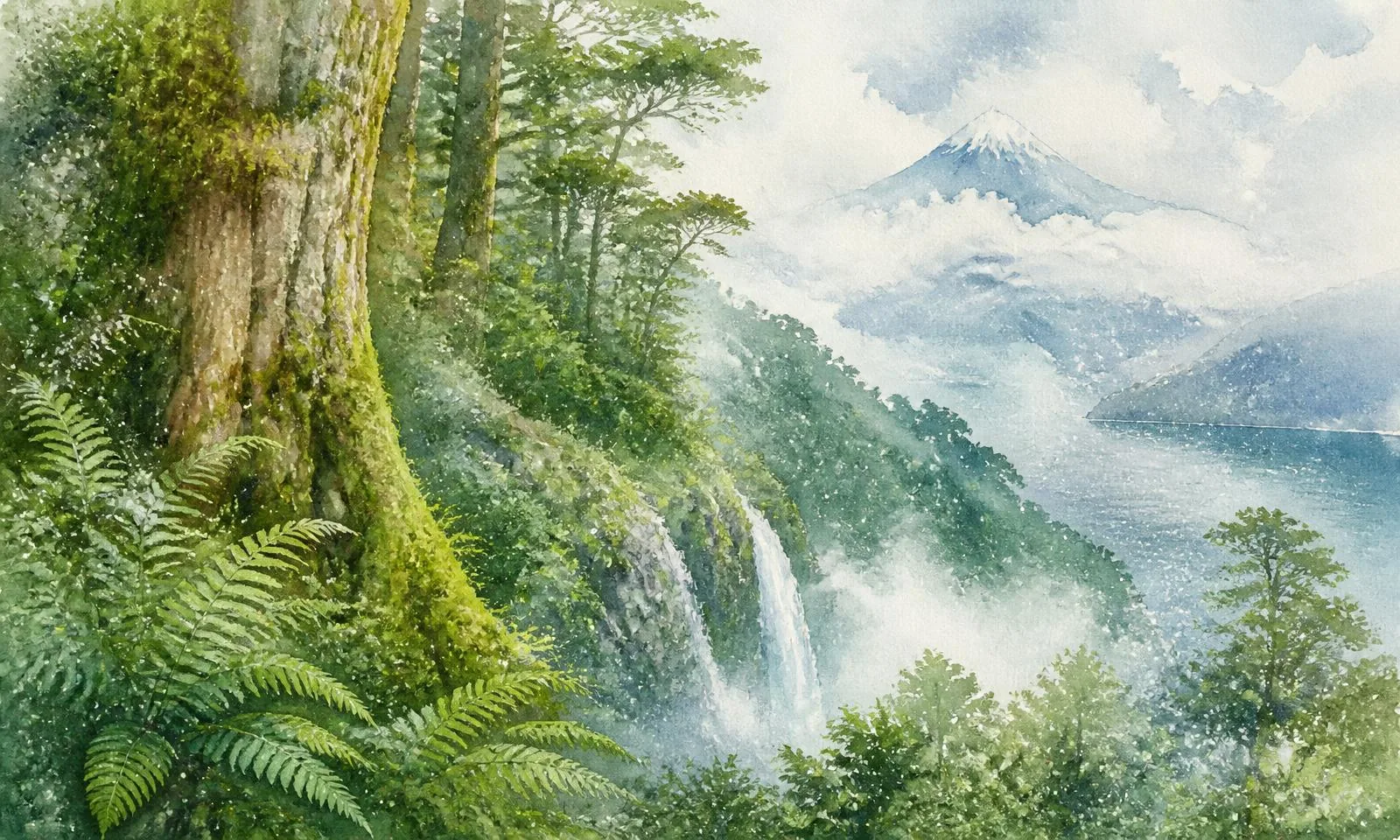
The first great project was Pumalín. In 1991 he bought a semi-abandoned farm in the Reñihué valley in Chile’s Lakes Region to protect 42,000 acres of Valdivian rainforest with its thousand-year-old alerce trees. Over the following decade he added neighbouring parcels until the area reached roughly 800,000 acres. In 2005 President Ricardo Lagos granted it Nature Sanctuary status, and in 2018 it became Pumalín Douglas Tompkins National Park - named after its founder.
The second was Patagonia National Park in the Chacabuco valley - a former sheep ranch from which the team removed hundreds of kilometres of fencing, let the grasslands, guanacos and pumas return, and built one of the finest visitor centres on the continent. It is the clearest proof that Tompkins never wanted merely to leave nature alone, but to actively heal it.
The culmination came after his death. In January 2018 Kris Tompkins and Chilean President Michelle Bachelet signed an agreement under which Tompkins Conservation donated around one million acres to Chile; the state added federal land, creating five new national parks and expanding three others - more than 10 million acres of newly protected landscape in total. It was the largest private land donation in South American history. Chile later granted Tompkins posthumous citizenship.
Argentina, Iberá and the return of the animals
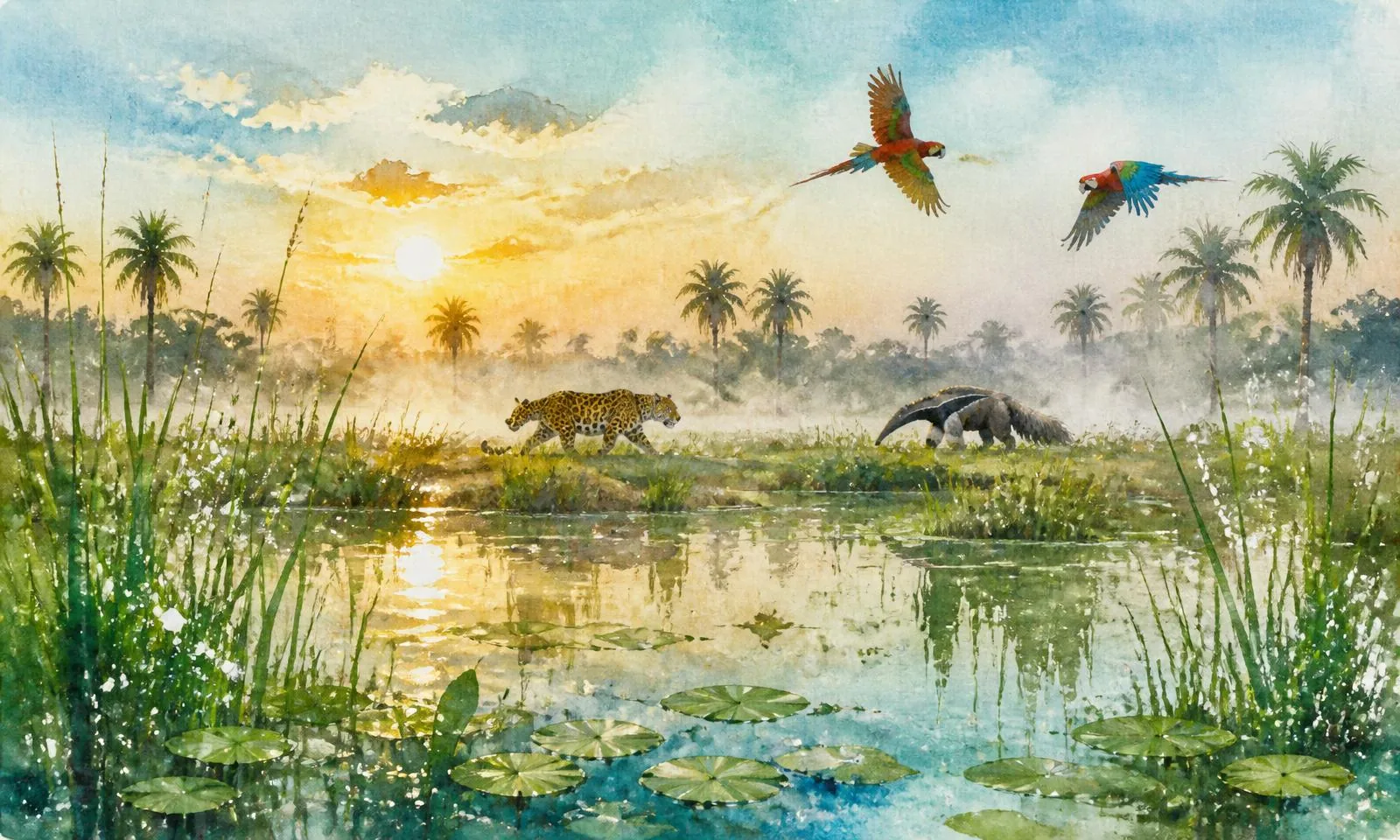
If Chile was about forests and mountains, Argentina was about animals. In the Iberá wetlands of Corrientes province the couple started what is now one of the world’s most successful rewilding projects: the return of species that had vanished - giant anteater, tapir, peccary, red-and-green macaw, giant river otter and above all the jaguar, absent from Iberá for over seventy years and now breeding in the wild there again.
That work is carried on by Rewilding Argentina, the team Doug and Kris assembled, led by Sofía Heinonen. The principle is the same as in Chile: a park should not be an empty backdrop but a working ecosystem, big predators included - and a livelihood for local communities that once lived from cattle and now live from visitors.
Kris Tompkins - the other half of the story
You cannot talk about Doug without Kristine "Kris" McDivitt Tompkins. Kris spent twenty years as CEO of Patagonia, Inc., turning Yvon Chouinard’s small operation into a global company and helping define what responsible business looks like. In the early 1990s she left Patagonia, married Doug and moved to Chile.
After Doug’s death in 2015 many expected the work to stall. The opposite happened: Kris completed the largest land donation in the continent’s history, finished the Chilean park network and still leads Tompkins Conservation today. She has received the Carnegie Medal of Philanthropy and serves as a UN Patron of Protected Areas. Doug was the visionary with bulldog stubbornness; Kris is the strategist who gets his visions all the way to a signature on a decree.
The end on Lake General Carrera
On 8 December 2015 Doug Tompkins went kayaking with friends - Yvon Chouinard among them - on Chile’s Lake General Carrera. A storm rolled in, waves capsized his kayak and he spent too long in the freezing water. He died the same day in hospital in Coyhaique of severe hypothermia, aged 72. He died in the landscape he had saved, doing what he loved most.
The documentary that beats any biography
The best way into their world is the documentary Wild Life (2023) by Jimmy Chin and Elizabeth Chai Vasarhelyi, the makers of the Oscar-winning Free Solo. It is not a nature film about parks but the story of two people - leaving business behind, a marriage, a death, and what it means to carry someone else’s dream to the finish. An older, rougher companion piece is 180° South (2010), which retraces the original 1968 Fun Hogs journey.
Why I tell this story
Tompkins’ legacy is uncomfortably simple: conservation is not done through declarations but through specific acres, specific animals and the specific people who live in that landscape. That is exactly what I try to do - every edition supports one concrete project, not an abstract good cause.
You can learn more at tompkinsconservation.org. And if you ever head to Patagonia, drive the Carretera Austral and stop in Pumalín - it is the best possible way to thank Doug.